

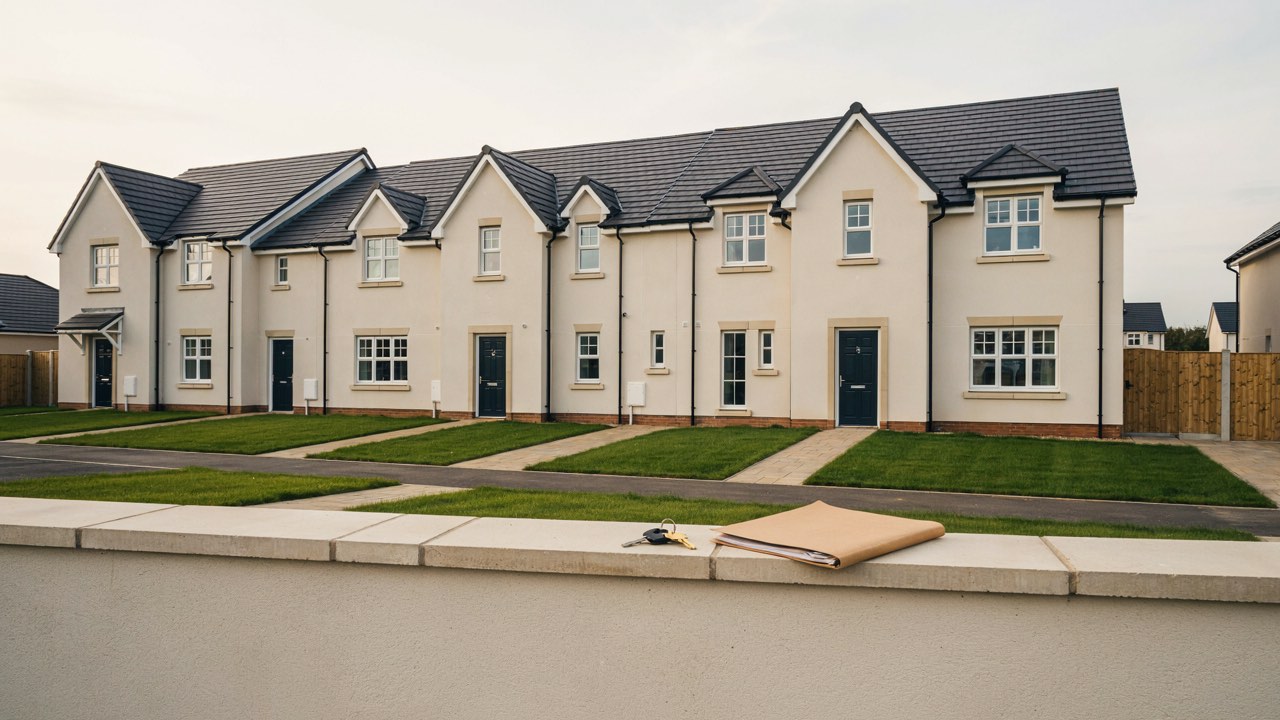
The Help to Buy scheme Ireland runs through Revenue refunds Irish Income Tax and DIRT to first time buyers of newly built homes, and to people building their own first home. For contracts signed, or self-build mortgages first drawn down, from 7 October 2026 to 31 December 2029, the refund is the lowest of €35,000, 10% of the purchase value and the tax you paid in the previous four years. The home must cost €500,000 or less, the mortgage must cover at least 70% of the price, and you must live there for five years. The scheme applies only in the Republic of Ireland.
The Help to Buy scheme Ireland offers first time buyers is a refund of Income Tax and Deposit Interest Retention Tax (DIRT) that helps with the deposit on a new home. Budget 2027 raised the maximum from €30,000 to €35,000 for contracts signed on or after 7 October 2026, and the scheme now runs until 31 December 2029.
What the Help to Buy scheme Ireland offers
Help to Buy is a tax relief, so it does not add to your mortgage and is not a loan. Revenue looks back at the Income Tax and DIRT you paid in Ireland over the four tax years before you apply and refunds part of it towards the deposit. When you buy from a developer, the money goes straight to the developer as part of your deposit. When you build your own home, it goes into an account you hold with your mortgage lender.
In the Dáil on 6 October 2026, the Minister for Finance described the scheme as a way to help first time buyers with the deposit for a new house or apartment and to encourage more new homes to be built. That second aim explains why the relief covers only newly built homes and never second hand ones.
The scheme has been running since 2017, and Revenue’s provisional statistics show 70,015 approved claims, worth about €1,607.1 million, by 30 September 2026. The average property value across those approved claims was €369,400, which sits well within the €500,000 ceiling.
How the Budget 2027 changes affect your claim
For anyone using the Help to Buy scheme Ireland introduced in 2017, the headline change in Budget 2027 is a higher maximum. The Department of Finance confirmed that the €35,000 limit applies to buyers who sign a contract for a new build home, or who draw down the first part of a self-build mortgage, on or after 7 October 2026. The date that decides which maximum you get is the contract date or the first drawdown, not the date you apply or claim.
The maximum has changed three times
| Contract or first drawdown date | Maximum refund | Share of purchase value |
|---|---|---|
| 1 January 2017 to 22 July 2020 | €20,000 | 5% |
| 23 July 2020 to 6 October 2026 | €30,000 | 10% |
| 7 October 2026 to 31 December 2029 | €35,000 | 10% |
A buyer who signed a contract on or before 6 October 2026 stays under the €30,000 limit, even if the house completes later. Citizens Information states that approved applications assessed at the old €30,000 maximum, which have not yet reached the claim stage, will be re-assessed automatically. Applicants can also cancel and re-apply if the new limit applies to them, although this may cause a delay.
The law is still being finalised
The €35,000 maximum was announced in Budget 2027 and is being legislated for in the Finance (No. 2) Bill 2026, which was published on 19 October 2026. Revenue’s own pages already show the new limit for contracts signed from 7 October 2026. Finance Bills normally pass before the end of the year, and we will update this guide once the Bill is enacted.
How the Help to Buy refund is calculated
The refund under the Help to Buy scheme Ireland operates is always the lowest of three amounts, so the maximum is a ceiling and not a promise. You can find the exact wording on Revenue’s page on how much you can claim, which lists them as €35,000, 10% of the purchase value of a new home (or of the approved valuation for a self-build), and the Income Tax and DIRT you paid in the four tax years before your application.
The cap of €35,000 applies to the property, not to each buyer. Two people buying together share one maximum, although their combined tax payments count towards the third limit. Revenue looks at the four tax years before the year you apply, so an application made in 2026 would use 2022, 2023, 2024 and 2025. Any tax already refunded to you for those years is left out of the total.
Two worked examples
These examples are illustrations of the formula and not official Revenue cases. A couple buys a new home for €320,000 and has paid €40,000 in Income Tax over the previous four years. Ten per cent of the price is €32,000, which is lower than both the tax paid and the €35,000 cap, so the refund would be €32,000.
A single buyer purchases a new apartment for €400,000 but has paid €28,000 in Income Tax over the same period. Ten per cent of the price would be €40,000 and the cap is €35,000, so the tax paid is the lowest figure and the refund would be €28,000. Only homes priced at €350,000 or more can reach the full €35,000, and only where the buyers have paid at least that much in tax.
Who qualifies for the Help to Buy scheme in Ireland
To claim under the Help to Buy scheme Ireland operates, you must meet conditions for the buyer and separate conditions for the property, all set by Revenue. The buyer rules come first because they decide whether you can apply at all.
First time buyer status
You must never have bought or built a house or apartment before, alone or with anyone else, in Ireland or abroad. If you are buying with other people, every one of them must be a first time buyer. Revenue checks this at the time of the claim, not only when you apply.
Tax compliance
Every applicant must be tax compliant and, where relevant, hold tax clearance. Citizens Information explains that this means filing a Form 12 for PAYE workers, or a Form 11 for self-assessed taxpayers, for each of the four years and paying any tax that is outstanding. The refund can only come from Irish Income Tax and DIRT you have actually paid in Ireland.
Living in the home for five years
You must buy or build the home to live in as your main residence for five years. Revenue can claw back the refund if you do not live there for that period, if you were not entitled to it, or if the purchase or build is never completed. The amount Revenue reclaims depends on the year you stop living there, so anyone thinking of moving or letting the property within five years should check the clawback rules with Revenue first.
Which new homes qualify for Help to Buy
The Help to Buy scheme Ireland operates applies only to new homes. The property must be newly built and never used, or suitable for use, as a home before, and its construction must be subject to Irish VAT. A non residential building converted to a home may also qualify. Buying a property as an investment rules it out.
The €500,000 ceiling
The purchase value must be €500,000 or less. For a new build, Revenue uses the full open market value of the property, and for a self-build it uses the valuation your lender approved when you took out the mortgage, which includes the cost of the site. That ceiling did not change in Budget 2027.
The 70% mortgage rule
You must take out a mortgage with a Revenue approved qualifying lender, and it must cover at least 70% of the purchase value or approved valuation. Shared equity from the First Home scheme does not count towards that 70%, which matters for buyers who plan to combine the two schemes. Our guide to mortgage approval mistakes to avoid covers the lending side of the purchase in more detail.
Approved contractors and self-builds
If you buy from a developer, the developer must be on Revenue’s list of qualifying contractors, which had 1,764 names at 30 September 2026. If you build your own home, you do not need an approved contractor, but a solicitor registered with Revenue as a Help to Buy approver must verify your claim.
How to apply for Help to Buy through Revenue
The whole process runs online, through myAccount for PAYE workers or ROS for self-assessed taxpayers. Revenue divides it into an application stage, a claim stage and a verification stage, and you usually start the first stage before you have found a home.
- Apply through the Help to Buy link in the Property and Land Services section of myAccount, or the Help to Buy applicant link on ROS, and choose the tax years you want to use.
- Receive an application number, an access code and an estimate of the maximum you could claim, along with the date the application expires.
- Make a claim once you have signed the purchase contract and accepted a loan offer, or drawn down the first part of a self-build mortgage, and upload the documents Revenue asks for.
- Wait for the developer, or your solicitor for a self-build, to verify the claim, after which Revenue releases the payment.
For a purchase, Revenue asks for the signed loan offer and acceptance form and a copy of the contract signed by the seller and every buyer. For a self-build, it asks for the loan offer, proof of the first drawdown and your lender’s valuation report. Lenders and developers can also check your likely maximum through Revenue’s mortgage query tool, which is useful when you are working out a budget.
Help to Buy and the First Home scheme
Many buyers use the Help to Buy scheme Ireland offers alongside the First Home shared equity scheme, and the two interact in ways worth knowing before you sign anything. Citizens Information states that the First Home scheme can fund up to 30% of a new home, but that this falls to 20% if you are also using Help to Buy.
The deposit rules also matter. Under the Central Bank of Ireland’s mortgage measures, first time buyers need a deposit of at least 10% and can usually borrow up to four times their gross income. Citizens Information states that a Help to Buy refund can contribute towards the deposit, but lenders apply their own policies, so confirm with your lender how the refund will be treated before you rely on it.
This section is general information about how the schemes work together and is not financial advice. A mortgage broker, your lender or a solicitor can tell you how the rules apply to your own purchase.
Help to Buy is not available in Northern Ireland or Great Britain
The Help to Buy scheme Ireland runs is an Irish tax relief and covers only new homes in the Republic of Ireland. England’s Help to Buy equity loan, which worked quite differently, closed to new applications on 31 October 2022. Buyers in Northern Ireland who need help to get onto the ladder can look at the Co-Ownership shared ownership scheme, which NI Direct lists among the low cost home ownership options there.
Checks to make before you sign for a new home
Before you sign, confirm that the developer appears on Revenue’s qualifying contractor list and that your application has not expired. Check the contract date carefully, because it decides whether the €30,000 or €35,000 maximum applies. Once the home is built, a professional snagging survey is the best way to catch defects before you move in, and our guide to snagging inspections done properly explains what that involves.
Questions about Help to Buy
Does a guarantor on the mortgage have to be a first time buyer?
A guarantor does not need to be a first time buyer. Revenue also treats a guarantor separately when deciding who must apply, so only the people named as borrowers on the mortgage need to apply together as a group.
Can I qualify if I owned a home with a former partner?
You cannot qualify if you previously bought a home jointly with someone else, according to Citizens Information. This holds even where you have since separated or divorced and given up your interest in that property.
Do USC and PRSI count towards the tax refunded?
Universal Social Charge and Pay Related Social Insurance are not included when Revenue works out the refund. Only Income Tax and DIRT count, which means someone on a modest salary may find the tax limit lower than they expected.
Does an inherited or gifted property stop me claiming?
Receiving a property by inheritance or as a gift may not affect your eligibility, depending on the circumstances. Revenue looks at each case individually, so contact Revenue with the details before you apply.
Starting your Help to Buy application
Log in to myAccount or ROS and start the application before you go sale agreed, so you know your likely maximum from the outset. Keep the application number, access code and expiry date with your mortgage paperwork, and make your claim as soon as the contract is signed.